Patient Education · Forest Hills, Queens
Do Hemorrhoids Cause Stomach Pain?
Quick Answer
(718) 261-0900Medically reviewed by Dr. Samuel Davidoff, MD, Board-Certified Gastroenterologist | 18+ Years Experience | Last Updated: May 2026
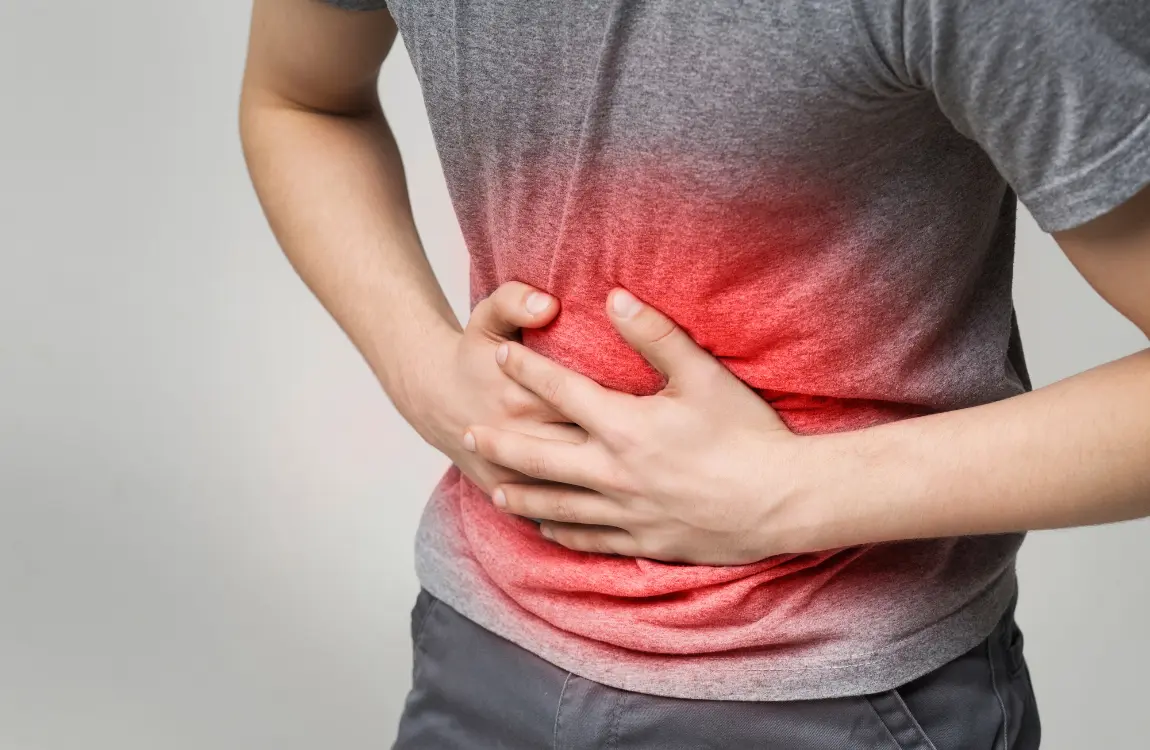
No, hemorrhoids do not directly cause stomach pain. As Doctor Yuriy Israel at Gastroenterology & Nutrition, P.C. explains, “Hemorrhoids cause pain locally around your anus. If you are experiencing stomach pain, it is likely due to another issue that needs to be addressed.” The connection most patients notice is indirect: chronic constipation, straining, and low-fiber diets can cause both abdominal cramping and hemorrhoid flares at the same time. If you have stomach pain alongside hemorrhoid symptoms, the stomach pain almost always traces to a separate digestive condition (constipation, IBS, gastritis, gallstones) that needs its own evaluation. Call our Forest Hills office at (718) 261-0900 if pain persists past 48 hours.
Where Hemorrhoid Pain Actually Comes From
Hemorrhoids are swollen veins in the anus and lower rectum. They are extremely common: roughly half of adults will develop them by age 50. The pain they cause is local, in the anal area, not in the stomach or abdomen. Two anatomic types behave very differently:
Internal Hemorrhoids
An internal hemorrhoid sits above the dentate line inside the rectum, where there are few pain-sensing nerves. Most internal hemorrhoids are painless and the first sign is bright red blood on toilet paper or in the bowl after a bowel movement. Larger internal hemorrhoids can prolapse (push outside the anus during a bowel movement) and become painful only when they swell or get pinched.
External Hemorrhoids
External hemorrhoids sit below the dentate line, where the skin has many pain-sensing nerves. These are the ones that itch, burn, and ache, especially when sitting, walking, or wiping. Pain is felt at the anal opening, not in the abdomen.
Thrombosed External Hemorrhoids
A thrombosed hemorrhoid happens when a blood clot forms inside an external hemorrhoid. The pain is sudden, sharp, and localized at the anus, often with a hard purple or blue lump that you can feel. Thrombosed hemorrhoids are most painful in the first 48 to 72 hours and may need same-day in-office treatment.
Common Hemorrhoid Symptoms (Stomach Pain Is Not One of Them)
Hemorrhoid symptoms are anal-area symptoms, not abdominal. The most common:
- Bright red blood on toilet paper or in the bowl
- Itching or irritation around the anus
- Burning or aching at the anus, worse with sitting
- A soft swelling or lump near the anus
- A feeling of incomplete evacuation
- Mucus discharge after a bowel movement
- Sudden sharp pain with a hard lump (suggests thrombosis)
If your main complaint is stomach pain (above the belly button), upper abdominal pain, lower abdominal pain, bloating, cramping, or back pain, hemorrhoids are not the cause. The next two sections explain what is.
Why You Might Feel Stomach Pain AND Have Hemorrhoids at the Same Time
Many patients have both stomach pain and hemorrhoids during the same week. The two are not connected by anatomy, but they share root causes: chronic constipation, low-fiber diets, dehydration, prolonged sitting, and pregnancy. Treat the underlying cause and both improve together.
Can Hemorrhoids Cause Bloating?
No. Hemorrhoids do not directly cause bloating. The reason patients notice both at once is that the constipation that triggers hemorrhoid flare-ups also produces bloating, gas, and abdominal pressure. Treating the constipation, more fiber (25g/day for women, 38g/day for men), more water, regular movement, usually relieves both. If bloating persists past 2 weeks despite fiber and hydration, see a gastroenterologist for IBS or food intolerance evaluation.
Can Hemorrhoids Cause Cramps?
Hemorrhoids do not produce abdominal cramping. Cramping with hemorrhoid symptoms usually points to constipation, an IBS flare, or food intolerance. Cramping that comes in waves with diarrhea, mucus, or visible blood can signal inflammatory bowel disease and needs an evaluation.
Can Hemorrhoids Cause Lower Abdominal Pain?
No. Hemorrhoids cause pain in the anal area, not the lower abdomen. Lower abdominal pain is more often a sign of constipation, IBS, diverticulitis, ovarian or pelvic conditions, or a urinary tract infection. If lower abdominal pain persists more than 48 hours, especially with fever, vomiting, or a change in bowel habits, get evaluated.
Can Hemorrhoids Cause Stomach and Back Pain?
Hemorrhoids do not cause back pain. Combined stomach-and-back pain can signal pancreatitis (often radiates from upper abdomen to mid-back), kidney stones (sharp flank-to-groin pain), or gallstones (right-upper-quadrant pain that can radiate to the right shoulder blade). All three need a gastroenterologist or urgent-care evaluation.
Other Digestive Conditions That Cause Stomach Pain
If you are searching “do hemorrhoids cause stomach pain,” your real question is usually “what IS causing my stomach pain?” These are the most common alternatives.
Constipation
The most common cause of overlap with hemorrhoid symptoms. Hard, infrequent stools cause both abdominal cramping and the straining that triggers hemorrhoid flares. Treatment: fiber, hydration, movement, and stool softeners.
Irritable Bowel Syndrome
IBS produces lower abdominal cramping that improves after a bowel movement, with alternating constipation and diarrhea. The constipation phase can flare hemorrhoids. IBS does not cause weight loss, fever, or rectal bleeding; if any of those are present, the diagnosis is something else.
Gastritis
Inflammation of the stomach lining. Burning upper abdominal pain, often worse with NSAIDs (ibuprofen, naproxen, aspirin), spicy food, or alcohol.
Acid Reflux (GERD)
Stomach acid backs up into the esophagus. Burning in the upper abdomen and chest, worse after large meals or lying down. Diagnosed by upper endoscopy.
Gallstones
Gallstones cause right-upper-quadrant pain that can radiate to the right shoulder blade, especially after fatty meals. Persistent pain with fever or jaundice is a surgical emergency.
Appendicitis
Pain that starts around the belly button and migrates to the lower right abdomen, with fever, nausea, and a rigid abdomen. This is an emergency room visit, not a phone call.
Peptic Ulcers
Open sores in the stomach or duodenum lining. Burning upper abdominal pain that can wake you at night or worsen on an empty stomach. Diagnosed by upper endoscopy with biopsy.
When Stomach Pain Is a Red Flag, Not a Hemorrhoid Issue
Stomach pain plus any of these symptoms is not a hemorrhoid problem. Get evaluated promptly:
- Sudden severe pain that does not improve with rest or over-the-counter pain medication
- Fever above 100.4°F (38°C)
- Unexplained weight loss (more than 10 pounds in 6 months without trying)
- Vomiting blood or black, tarry stool
- Persistent change in bowel habits (new constipation or diarrhea lasting more than 2 weeks)
- Rectal bleeding with weight loss or family history of colon cancer
- Age 45 or older with no recent colonoscopy screening
- Difficulty swallowing or food sticking
Any combination of these warrants a same-week appointment with a gastroenterologist, not a wait-and-see approach.
How We Diagnose the Real Cause of Your Stomach Pain
If you have stomach pain alongside hemorrhoid symptoms, our team rules out the underlying cause with a stepped workup:
- Anoscopy or rectal exam in the office: confirms hemorrhoid grade, rules out fissure or local mass
- Stool studies: ova-and-parasite, calprotectin, occult blood, infectious panel
- Bloodwork: CBC, CMP, lipase, liver function for ulcer, gallbladder, or pancreatic causes
- Upper endoscopy: for upper abdominal burning, suspected gastritis, ulcer, GERD, or unexplained anemia
- Colonoscopy: for rectal bleeding workup, age 45+ screening, IBD evaluation, or chronic lower abdominal pain. You can schedule a colonoscopy directly from our procedure page.
- Imaging: ultrasound for gallbladder; CT for diverticulitis or appendicitis when symptoms suggest it
For background on related questions, see our companion guides: whether hemorrhoids can be removed during a colonoscopy, hemorrhoids do not directly cause stomach pain at night either, and drink plenty of water guidance before your endoscopy. Avoid foods that worsen GI inflammation while you wait for your appointment.
How to Handle Long-Term Stomach Pain
If stomach pain has gone on more than 2 weeks, do not assume hemorrhoids are the cause. Schedule an evaluation. In the meantime:
- Track when the pain happens (after meals, at night, with stress)
- Note what makes it better or worse (food, position, bathroom)
- Track bowel movements (frequency, color, consistency, blood)
- Increase fiber gradually (5g per week to avoid worsening gas)
- Hydrate (8-10 cups water daily)
- Limit NSAIDs, alcohol, and heavily spiced or fatty meals
- Avoid prolonged sitting (use a donut cushion if hemorrhoids flare)
Bring this log to your appointment. It speeds the diagnostic workup.
Visit Gastroenterology & Nutrition P.C. in Forest Hills, Queens
If you have stomach pain along with hemorrhoid symptoms, our team can sort the two and treat the actual cause. Dr. Samuel Davidoff and the gastroenterology team at Gastroenterology & Nutrition, P.C. have served the Forest Hills community for over 20 years and offer in-office anoscopy, colonoscopy, upper endoscopy, hemorrhoid banding, and full GI workup under one roof.
Address: 108-16 72nd Avenue, 2nd Floor, Forest Hills, NY 11375 Phone: (718) 261-0900 Hours: Sunday 9 AM to 1 PM, Monday/Wednesday/Thursday 9 AM to 5 PM, Tuesday/Friday 9 AM to 4 PM
Neighborhoods we serve: Forest Hills, Rego Park, Kew Gardens, Elmhurst, Jackson Heights, Middle Village, Ridgewood, Astoria, Flushing, Richmond Hill, Glendale, and surrounding Queens communities. Our Forest Hills office offers same-week scheduling, Sunday hours, and Spanish-speaking staff at the front desk.
FAQ
Frequently Asked Questions
Gastroenterology & Nutrition, P.C. · Forest Hills, Queens
Ready to Schedule Your Appointment?
Same-week consultations. Sunday procedures offered. Most major insurance accepted.